


The cost of staying comfortable never arrives as an invoice. Nothing flashes red, no alarm sounds and nobody calls a meeting. The old tools keep working, the routine keeps running and the quarter ends without incident. That quiet is exactly what makes comfort expensive, because the price is paid later, all at once, and usually at the worst possible moment.
In cyber security the stakes are higher than in most fields. Attackers do not stay comfortable. They test new methods every week, while defenders are often tempted to rely on what worked last year. This guide explains the real cost of staying comfortable, for organisations and for individual careers, and gives you a practical way to start moving again.
What Is the Cost of Staying Comfortable?
Everyone has a comfort zone: the set of tasks, tools and habits where we feel capable and low on stress. Comfort itself is not the problem. Rest and routine are healthy. The trouble starts when comfort becomes the default decision-maker, so that we avoid anything unfamiliar even when the situation has changed.
The cost of staying comfortable is the gap that opens between what you know and what the environment now demands. It is hidden because it is made of things that did not happen: the skill you did not learn, the control you did not review, the question you did not ask. Missed opportunities leave no paper trail.
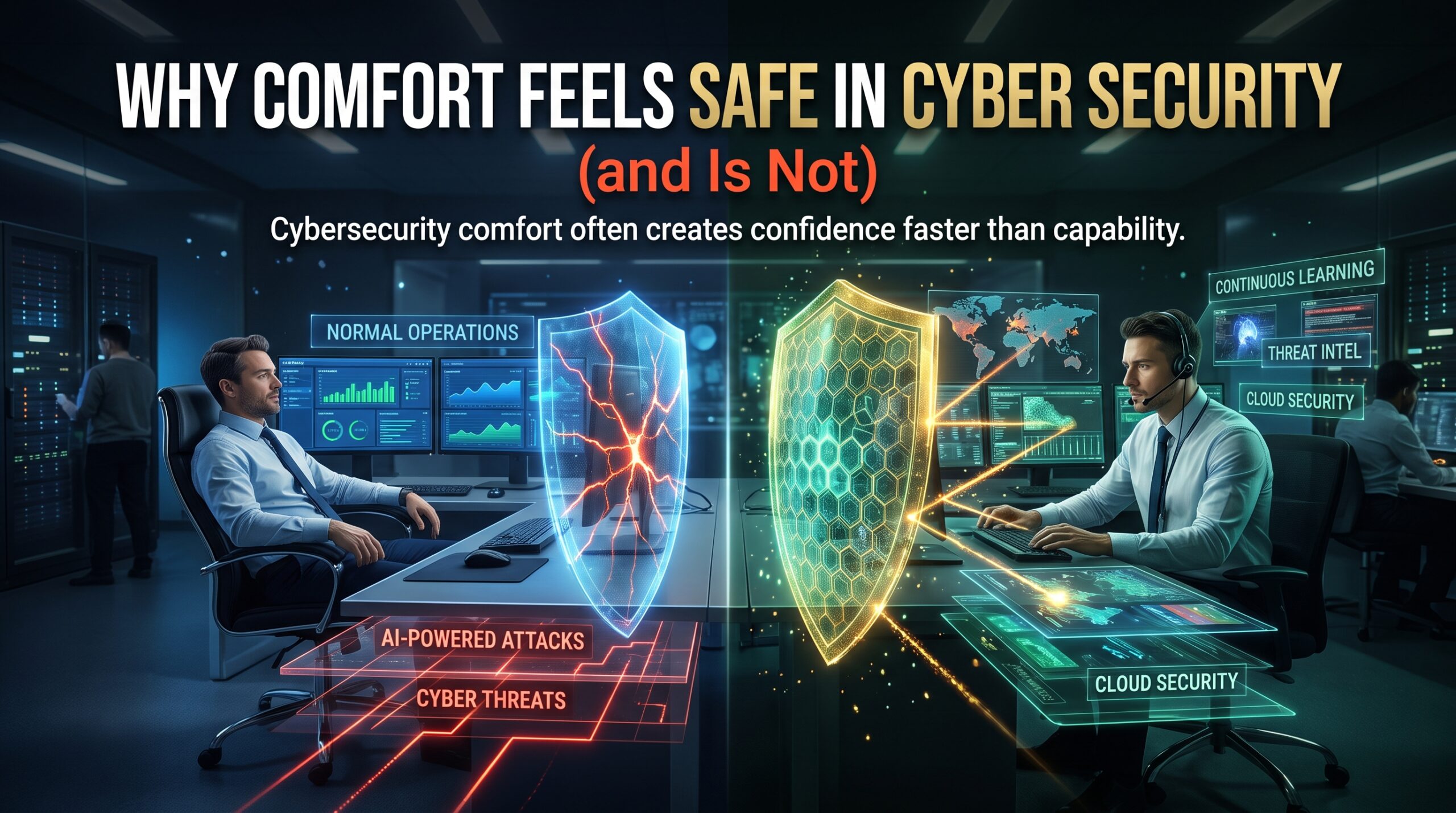
Why Comfort Feels Safe in Cyber Security (and Is Not)
Security teams are especially prone to comfort because success looks like nothing happening. A quiet year can be read as proof that everything is fine, when it may only mean the next attack has not arrived yet. Several patterns feed this false confidence:
- “We have never been breached.” Past luck is treated as a security control.
- Familiar tools. Teams keep using the product they know, even when the threat has moved on.
- Quiet workarounds. Small exceptions to policy slowly become normal. This pattern is known as normalisation of deviance.
- Stale credentials. Qualifications earned years ago are assumed to cover today’s risks.
- Busy-ness as an excuse. Learning always loses to the urgent ticket queue.
The Hidden Cost of Staying Comfortable for Organisations
For a business, comfort shows up in unglamorous places. Patching slips by a few weeks and then a few months. A multi-factor authentication exception granted “temporarily” is still in place two years later. The incident response plan sits in a shared drive, untested and out of date. Nobody has questioned the access list since the last restructure.
None of these items is dramatic by itself. Together they create the conditions attackers look for. The Australian Government’s Essential Eight, published by the Australian Cyber Security Centre, is a good example of a baseline worth reviewing on a regular schedule rather than once. Comfort treats security as a project that finished. Reality treats it as a habit that never ends.
The Hidden Cost of Staying Comfortable in Your Career
Individuals pay too. When you stay in the same role, on the same tools, at the same level of challenge, your skills slowly stop being a moving target and become a fixed one. The market keeps moving, so the distance grows without you noticing.
The cost of staying comfortable in a career tends to arrive in three forms. First, you become harder to move, because your experience is deep in one narrow area. Second, you become less visible, because nothing new appears on your profile for recruiters or leaders to notice. Third, your confidence erodes, because every new technology feels like a mountain you have not climbed. If you want more on this theme, see our related reads on the opportunity cost of standing still, the replacement risk and career resilience in cyber security.
Warning Signs You Have Become Too Comfortable
- You cannot remember the last time you learned a new tool or technique.
- You describe your skills using technology that is several years old.
- You avoid job postings because the requirements look unfamiliar.
- Your team’s playbooks have not been tested in a real exercise recently.
- You say “that is how we have always done it” more often than you ask “why”.
- Learning only happens when someone else forces it.
Here is a quick check. If a major incident happened tomorrow, which part of your plan or your skill set would you least want tested? That is usually the exact spot where the cost of staying comfortable has been hiding.
How to Break Out of Your Comfort Zone Without Burning Out
You do not need a dramatic reinvention to reduce the cost of staying comfortable. Small, regular stretches work better than rare heroic efforts.
Start With One Small Stretch
Pick a single topic you have been avoiding, such as cloud security, penetration testing or network defence, and commit to a modest weekly slot. Consistency beats intensity.
Test What You Assume
Run a tabletop exercise, a phishing simulation or an access review. Turning assumptions into evidence is the fastest way to find hidden risk.
Get an External Benchmark
A recognised certification gives you a clear target and an independent measure of what you know. Programs such as CompTIA Security+ are widely used as a structured starting point for security skills.
Build a Learning Rhythm
Block time in your calendar the same way you would for a client. Treat it as part of the job, not a bonus.
7 Steps to Stop Paying the Cost of Staying Comfortable
- Name your comfort zones. List the tools, tasks and assumptions you rely on without question.
- Check the date. Note when each one was last reviewed, updated or tested.
- Pick one priority. Choose the gap that would hurt most if it were exposed.
- Set a 90-day goal. A short deadline creates momentum without overwhelming you.
- Choose structured learning. Guided, hands-on training saves time compared with piecing it together alone.
- Practise in a safe space. Use labs and exercises where mistakes are cheap.
- Review and repeat. Schedule the next stretch before you finish the current one.
Cyber Security Certification Training Across Australian Cities
Structured training is one of the quickest ways to end the cost of staying comfortable. Cybersecurity Certifications offers instructor-led, hands-on courses for learners in Melbourne, Sydney, Brisbane, Perth, Adelaide and Canberra, along with live online and in-house options. See all training locations.
Pick the pathway that fits your next step:
- CompTIA Security+: an entry-level, all-round cyber security course that builds a solid foundation.
- CompTIA CySA+: an advanced course for analysts who want holistic security knowledge.
- CompTIA PenTest+: for professionals working on penetration testing.
- Palo Alto PCNSA: for security engineers working with Palo Alto devices.
- Microsoft AZ-500: for professionals focused on Microsoft security.
Not sure which course to choose? Read which cyber security certification will actually get you hired, explore why credentials matter to customers or learn about the cyber security opportunity gap. You can also visit About Us, the FAQs, the blog, or contact the team on 1300 649 299.
Frequently Asked Questions
What is the cost of staying comfortable?
The cost of staying comfortable is the hidden gap between your current skills, habits or controls and what your environment now requires. It appears as missed opportunities, outdated defences and slower career growth rather than a single visible loss.
Why is complacency dangerous in cyber security?
Threats change constantly. When teams rely on past success, they delay patching, skip tests and keep outdated policies, which leaves gaps that attackers can use.
How do you know if you are too comfortable in your career?
Common signs include not learning a new tool recently, avoiding unfamiliar job requirements, relying on outdated skills and only learning when someone forces you to.
What is the best way to leave your comfort zone at work?
Start with one small, regular stretch, test your assumptions with exercises, set a short learning goal and use structured training or certification as an external benchmark.
Which cyber security certification should a beginner start with?
CompTIA Security+ is an entry-level, all-round cyber security course that builds a solid foundation and is a common starting point for beginners.
Conclusion: Comfort Is a Choice You Can Change
Comfort feels like safety, but in a field that never stops moving it is closer to a slow leak. The cost of staying comfortable grows quietly until a breach, a missed promotion or a failed audit makes it visible. The good news is that the fix is small and repeatable: one honest review, one new skill, one tested assumption at a time.
If you are ready to take that first step, explore the cyber security courses or speak with our team today. Your future self will thank you for starting before you had to.